

Camera analytics on fixed video streams
Fixed cameras send most of the same pixels frame after frame. Analytics that run per region can skip regions where nothing changed. Delta Routing tiles the frame and recomputes only the tiles that changed.
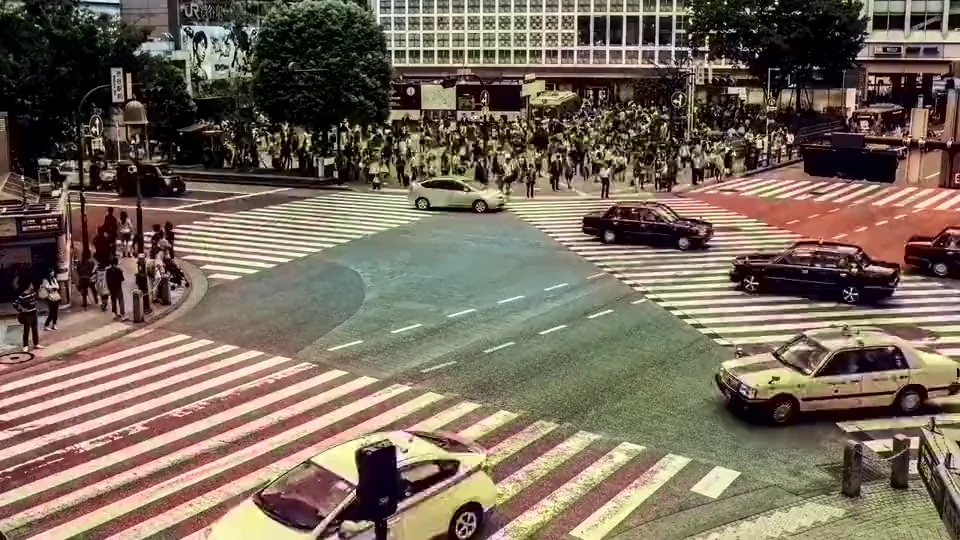
What was measured
Two recorded RTSP streams, analyzed with a blur and Sobel edge filter applied to each region. The baseline runs the analytics on every full frame. Decoding is timed separately.
| Per-region analytics | Stream | Speed against full frame |
|---|---|---|
| Heavy | Stream A | 2.75 times faster |
| Heavy | Stream B | 17.6 times faster |
| Light | Stream A | Full frame is faster |
| Light | Stream B | 2.8 times faster |
Conditions
- Input: recorded RTSP streams. The analytics is a proxy filter, not an object detector.
- Record: historical ratios from one run. The run kept no record of the machine, toolchain or input clips, and its log carries no correctness check. Treat the speeds as indicative until the run is repeated with a full record.
- Scope: per-region analytics only. Detection models that run on the whole frame are a different workload.
Where this applies
Use Delta Routing when the camera is fixed, the analytics is local to regions, and most regions are unchanged from frame to frame. When the analytics is light, or most of the frame changes, full-frame processing is the better choice.